THE Danny Thompson Website


The Danny Thompson Website since 2001!

This short biography was approved by Danny way back then. Enjoy!

BIOGRAPHY

Danny Thompson is possibly the finest acoustic bass player the world has known. A bold statement especially when you consider some of the greats such as the late Charles Mingus and others including Charlie Haden and Dave Holland. But such a statement can genuinely be made. Danny would be touched to read this, although his modesty would not allow him to take it too seriously or indeed consider it for too long, he would no doubt respond, "You're 'aving a laaaaarf!"

Danny was born in Teignmouth, Devon on 4th April 1939 the son of a miner. His father was one of twelve children, six sisters and six brothers and many of Danny's uncles were Geordie miners. At the outbreak of war Danny's father, left the pit and volunteered for the Navy where he worked crewing submarines. The ravages of war soon hit home to the Thompson family as Danny's father was declared missing in action. Although very young Danny can still remember the cold and heartless letter his mother received from the War Office. Unbelievably, the Thompson family was soon to suffer another tragedy with the death of Danny's sister. Times were hard and at six years old Danny moved with his Mum to Battersea in London in the hope that employment may prove easier to find. The social and economic aftermath of war was biting hard and like many children Danny did not have the easiest childhood especially without his father.

Danny attended Salesian College in Battersea and was both a gifted footballer, playing as a Chelsea junior, and also a boxer. Danny would also have been London swimming champion but was robbed of victory when his trunks fell off as he dived in! So Danny had to make do with second place. As a youngster Danny tried playing guitar, mandolin, trumpet and trombone before settling on double bass. Unable to afford a bass Danny built his own out of a tea chest, with piano wire for strings and hinges so that it was collapsible and he could carry it around on the bus.

I asked Danny why the double bass? " I tried everything else but when I got hold of it that was it." From the age of eleven Danny recalls many hours entranced listening to black blues on the radio. The Voice of America and the Alan Lomax Blues Programme, which saw Lomax visiting Penitentiaries and talking to inmates, were particularly influential. "The main influence when I was a kid was the blues and especially Big Bill Broonzy," says Danny. "Like all fourteen year old kids we got a band together, my mate Paddy on mandolin and guitar, and me on tea-chest bass." At fifteen Danny left home and rented a room in a house. Little did he know that in the years to come he would not only go on to play with many of his musical heroes but that he would come to be admired by those very musicians as an outstanding musician himself. "We used to play the Skiffle Cellar and the King's Head pub in London's Gerrard Street. I remember my mate Paddy saying, "We're having Danny on this because no one gets his sound." On a tea chest! I often think I was destined for this 'sound' business."

Danny was soon to graduate from tea chest bass to the double bass, so called because it is two full octaves lower than the Viol. Danny heard that an old man in Battersea had an acoustic bass for sale. "I went running round and sure enough there was a bass, a great big black thing. The owner was an old boy, he must have been about eighty-five years old. I asked him how much he wanted and he said five pounds, which was a lot of money to me. So I asked him whether I could pay it off at five shillings a week and he agreed. I took it away with me and that night I was working with a jazz group and I tied the bass on the top of the car with no cover. It then started to rain and when I got to the gig I had to wipe off the water. The black paint also came off to reveal a beautiful varnish underneath."
Danny took the bass to be valued and was astonished to learn that it was worth 150. "I went back to the old boy and told him it was worth much more than a fiver. He said, 'I know that son, but if you want it and you're really going to do it then just give me the five bob a week like we said."

That bass has remained with Danny ever since. 'Victoria' as Danny affectionately calls her was made by the French maker Gand in 1865 and is now worth nearly 30,000. Over the last forty years Danny and Victoria have grown ever closer and to Danny no amount of money could ever replace her. " Yeah, my absolute beloved. I've tried other instruments, but I've felt worse than unfaithful. It's been like a betrayal. We come as a pair, a partnership. I know every crack, every splinter on her body."

Above the door in Danny's room he pinned a big sign that read "PRACTICE!" And practice he did getting up at 7am to start practicing for ten hours most days. Such was Danny's determination and ambition that when he walked to the door to go out he would see the sign, change his mind and start to practice again!

Danny then started to play in a Glenn Miller-type youth orchestra and was staggering home one night with his double bass when a large Studebaker screeched up behind him and out leapt an American asking if he played double bass. The question didn't really require an answer! Danny recalls "I auditioned at my own flat, and ended up doing Brize Norton as my first professional gig. " In between touring the circuit of US Air Force bases as part of a band, the now sixteen year old Danny was to start playing in Soho at a strip club called The Spiders Web in Meard Street. "I was so embarrassed, bright red in the face, but it was a really good gig to do, because the strippers used to finish about eleven and then because it was a quartet, we used to back the strippers, the strippers would leave at eleven and then all the musicians from all the clubs and restaurants used to come down because we had a resident rhythm section and we used to jam until five in the morning." Danny went on to meet Tubby Hayes, Phil Seaman and Pete King in those early morning jamming sessions, "I got to play with some phenomenal musicians...I was only young and my harmonic sense wasn't developed, but I could drive things along. I was always being encouraged; the others gave me heaps of friendly advice, but were never patronising."

Danny's first regular gig was with the Nat Allen Orchestra who played at the Locarno Ballroom in Streatham, South London. The Orchestra toured to Belfast and then Nottingham. Danny was earning good money for the first time and it came as quite a shock when he was arrested at The Palais in Nottingham!

Danny had been on the road for some months and was unaware that he had been called up for National Service. Three days before Danny joined the army he married Daphne Davis in Paddington, London and at eighteen years old Danny was now facing assault courses and machine gun practice at Winchester Barracks rather than pursuing his chosen career. Danny joined the band and served three years in the army. "It was weird they'd never had a professional musician in the band before! But I was told to forget the bass; I needed something I could march with." Danny tried bassoon and trumpet before finally deciding on the trombone which he took to straight away and he was soon playing lead trombone in the regimental band. Some years later Danny was to discover that his uncles were all brass band players and had played trombone in the world famous Bessie's o' the Barn, the Morris Cowley Works Band and the Manchester CWS Band. Although he wasn't best suited to Army life Danny knuckled down to become the best recruit of the intake, regimental boxing champion and an accomplished soldier with the sniper rifle.

Danny was then posted to exotic Penang in Malaysia for two years and his interest in music took him out-of-bounds on every available occasion to visit the music clubs and absorb the local music and culture. "You weren't allowed anywhere near clubs, of course that's where I went because that's where the bands were, and because I had my hair shorn with the nuts and bolts sticking out, people didn't want to know me because they knew that I was a squaddie...and I said 'well I only want to have a play' and so this Tamil Indian bloke said 'go on let him play' and as soon as I started playing they accepted me!"

Danny won many friends through his playing and as he approached the end of his service he was offered a job playing and producing for Radio Malaya. Danny just wanted to get home and returned to England without a job. Danny found that the dance hall scene was changing and a music revolution was taking place. 1963 saw the birth of Danny's son, Danny junior, who was also destined to be a musician becoming the drummer in Hawkwind. With a young family and no work Danny drove a lorry for a while to make ends meet before being asked to play bass for Roy Orbison. Danny went on to play electric bass on three tours involving Freddie and the Dreamers, The Searchers, Brian Poole and The Beatles, who were just starting to make a name for themselves. This was the first and last time that Danny and his double bass were parted on stage. "I had just come out of the army and I was totally broke. I couldn't get a gig and I saw there was an opening with Roy Orbison. I said who is he? I don't know him? Someone said he did rock 'n' roll and I said I didn't know his music. I was told you don't have to, just play. So I did and he was a wonderful man; a great person. I did three tours with him and haven't played bass guitar since."

In 1964 Danny joined Alexis Korner's Blues Incorporated replacing Jack Bruce who went on to form Cream and Danny was to become the longest serving member of Blues Incorporated. At the same time he was also working with jazz musicians such as Tubby Hayes, Ronnie Scott, Stan Tracey, John Stevens and Harold McNair as well as from America, Little Walter, Josh White, Joe Williams, Art Farmer, Freddie Hubbard, Sonny Terry & Brownie McGhee, Tom Paxton, John Lee Hooker and Tim Buckley. Danny was quickly making a name for himself and Melody Maker fuelled the fire by running a front page article declaring him as the most promising new bass player - how right they were!

Regular television appearances were now the norm including a residency with Blues Incorporated on the children's programme
'5 o'clock Club'. The work with Blues Incorporated provided some financial stability to Danny and allowed him to buy his first house in Montague Road, Wimbledon. The work came thick and fast as Danny's reputation grew and he was now playing in the Johnny Burch Octet which featured Graham Bond and Ginger Baker, The Poetry Band with Pete Brown as well as his own trio 'The Danny Thompson Trio' with Tony Roberts on saxophone and John McLaughlin on guitar. Danny also played with the innovative folk guitarist Davey Graham on Folk Blues and Beyond, Large As Life and Twice As Natural and Hat, to this day Danny recalls the many different influences of Davey's music and his unique advanced technical ability of the time. In contrast to the television appearances Danny recorded a tune in a front room that would prove to be timeless, the theme to the television series Thunderbirds by Gerry Anderson, "We recorded in a small front room, Barry Gray lived at Edgware in a row of houses and in this room he had a crude recording set up where he did all the music for Thunderbirds..."

During the coffee break of a television show Danny met and got talking to folk guitarist John Renbourn. "We got chatting about the folk gigs John did with Bert Jansch, things I'd never heard of, so I later went to one of these gigs and we ended up doing a couple of numbers together." These sessions at the Three Horseshoes pub in London's Tottenham Court Road became a regular event and soon Jacqui McShee joined them. Before long they decided to add a drummer to the line up and Danny recommended Terry Cox who he had played with in Blues Incorporated. The result was the formation of Pentangle in 1967, a landmark band in the development of British folk-rock and one of the first supergroups.

Pentangle enjoyed great success producing some acclaimed albums particularly 1969s Basket Of Light. The jazz folk fusion was all new, as was the band's use of amplifiers, which Danny recalls resulted in death threats! Pentangle had a hit single with Light Flight, which was used as the theme tune to the television series Take Three Girls and saw the band appearing on Top Of The Pops with Jimmy Saville as compere. In 1972, Danny decided to leave the group to spend more time with his young family by which time he had pushed back the contemporary boundaries of folk music with innovative solos, notably with Pentangling and then Haitian Fight Song on Sweet Child, and on other Pentangle songs at a time when it was unheard of for a double bass player to play a solo especially within a folk group. Danny separated from his first wife in the mid 1970s and later they divorced remaining as friends.

Throughout the 60s and 70s Danny continued to play at Ronnie Scott's with many visiting stars such as Mark Murphy, Jon Hendricks and Brook Benton. In 1969 Danny played on Congratulations with Sir Cliff Richard and in the early 70s Reason To Believe with Rod Stewart. Strangely enough it is often said that Danny played on Maggie May but he didn't! Danny went on to play with Nick Drake on Five Leaves Left and Bryter Layter as well as a host of other artists in the 1970s including Harold McNair, Tim Buckley, Rod Stewart, Donovan, Mary Hopkin, Ralph McTell, Sandy Denny, Tom Paxton, Marc Bolan and Magna Carta.

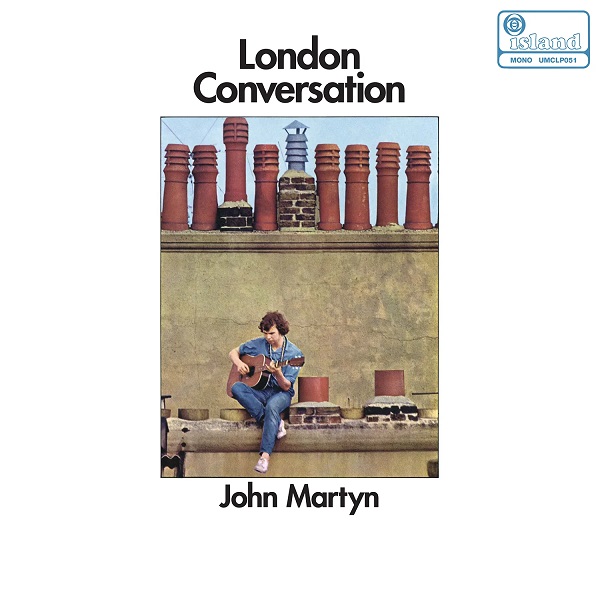
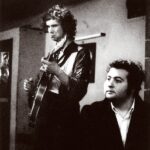
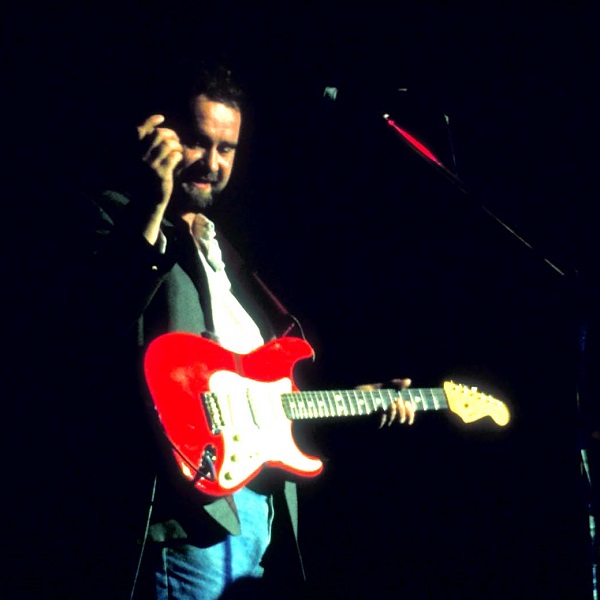
Having met John Martyn at the Newport Folk Festival in Rhode Island, USA Danny started to work with John; an alliance that was to last through the 1970s. The pair built enviable reputations as live performers in the 1970s and stories of their antics both on and off the stage abound. This partnership was more a collision than collaboration and produced some wild and legendary performances with the pair trading licks, riffs and good humoured insults on stage. John was to say of Danny, "Of all the musicians I've come into contact with Danny has taught me the most...particularly about style and jazz technique." Off the stage they became great friends, and today they are still in contact with each other on a weekly basis.

Towards the end of the decade Danny became disillusioned with music and was not in the best of health. "I could drink for England. I used to drink on a regular basis eight whiskeys or vodkas in a glass, a quadruple duple, people used to laugh but that was my drink!" Danny gave up alcohol in 1978 and taking a break from music set up a film company called Hero Productions with offices in London's Soho. Through Danny's love of wildlife he was to meet the late John Aspinall, an entrepreneur who shared Danny's passion and who owned two wildlife parks in the south of England. Hero Productions became well known for making wildlife documentary films such as Passion to Protect, which won Danny a Hugo Award at the Chicago International Film Festival and Echo of the Wild, both of which were subsequently broadcast by the BBC. Danny's enthusiasm and professionalism often took him into the enclosures with the animals and before long he was nicknamed "Tiger Thompson" by a keeper called Jim Cronin. Jim is now well known for rescuing monkeys and is the owner of Monkey World in Dorset. Many years later Jim was surprised to see Danny playing bass on the television show Later with Jools Holland. Danny recalls Jim telephoning him and saying, "hey Tiger Thompson I saw you on the TV you're a famous bass player!"

Danny returned to music in the 1980s and toured Australia and New Zealand with Donovan as well as contributing to albums by Kate Bush (The Dreaming and Hounds of Love), David Sylvian, Talk Talk, The The and Everything But The Girl. In 1987 Danny finally achieved a long-held ambition and made a record of his own. "I've always been on the fringe of the jazz world and I had an idea to incorporate elements of jazz and folk music, to make a melodic instrumental album with a distinct English flavour." The title Whatever was chosen to anticipate the usual question, "do you play blues, jazz or folk?" Whatever won praise from the critics as a seamless fusion of jazz, blues, rock and folk, and as an unclassifiable masterpiece. In the critic's poll the album was voted fifteenth in the years top 50 jazz albums. Guitarist Bernie Holland joined Danny, and Danny was also reunited with Tony Roberts (tenor, alto, flute and Northumberland Pipes) who had played in the Danny Thompson Trio in the mid 1960s.

In 1988 Danny made an album with Toumani Diabate and members of the Spanish flamenco group Ketama. Toumani is renowned for playing the Kora, a 21-string cross between a lute and a harp. Collectively they were called Songhai and they proceeded to be very successful in the World Music charts with an exquisite blend of African, Spanish and English musical ingredients. Danny first met them in Madrid, "I walked in and they were all there playing this amazing music, unbelievably fast. They looked at me and it was like, play really, really good...or you're dead. But we got along fantastically, both the Kora and Spanish guitar are a lot of wood and strings and I have a lot of wood and strings, so it worked...because we like each other. Again music from the heart."

May 1989 saw the release of Danny's next album Whatever Next, free flowing, improvisational and with strong emotional currents, featuring Tony Roberts, Bernie Holland and Paul Dunmall (tenor, soprano and baritone saxophones). Danny toured the United Kingdom to appreciative audiences and packed houses. The song Wildfinger is dedicated to John Martyn and Beanpole to Sylvia. In 1990 Danny and Sylvia got married in Las Vegas after a courtship of some sixteen years. About time! Was the response from Danny's stepsons, Simon who is a keeper at London Zoo and Ian who breeds Angus Beef in Hertfordshire.

Danny discovered Islam and became a Muslim before the release of his third album Elemental which was released on September 3rd 1990 and which again featured Tony Roberts, who was also joined by a host of other first class musicians. Women In War and Beirut are forceful performances and Musing Mingus is one of Danny's outstanding compositions on the album.

In 1992 Danny was approached to make a teaching video about playing acoustic bass. Not being a teacher he declined but agreed to make a video talking about playing bass and the things that inspired him. The video Bassically Speaking was released and has inspired many young people to become musicians.

Danny then embarked on a 10 month course to become a tutor in Community Music. "My main desire is to help perfectly able-bodied kids who feel that the world is ignoring them - the socially orphaned." He went on to run a workshop for 6 months for the Physically Handicapped and Able Bodied (PHAB) in Leigh-on-Sea, Essex. Danny was committed to the project which not only resulted in new musicians but also provided enjoyment, new life skills and confidence to the young people that took part. The 1990s also saw the start of Danny's partnership with Richard Thompson ex-Fairport Convention and once a deadly rival (as Danny would say jokingly) of Pentangle.
Danny has since toured extensively with Richard Thompson in band and duo format including two tours of the USA in 1994 and also Australia, Japan and Europe.

In 1993 Danny performed with Richard Thompson at Crawley. The gig was recorded and released in 1995 featuring Richards's son Jack who is also Danny's godson on the front cover.

1995 also saw the release of Songhai 2 a follow up to the very successful first album on which Danny again played bass.
A compilation of music from Whatever's Next and Elemental entitled Whatever's Best was released in the same year. Danny is still passionately enthusiastic about music and has never been one to go with the stream, he constantly seeks new experiences and challenges, he is always seeking to learn from music. "Music is like a religion, if you want to do something you have to work at it, you have to practice. "

During 1995 Danny recorded an album with Peter Knight the well respected violinist known for his outstanding musicianship with Steeleye Span. The album consists of two separate pieces of work, the thirty minute epic Number One and nineteen minute Number Two both of which are entirely improvised.

Danny's next album Singing The Storm saw him collaborating with the Scottish Harpist Savourna Stevenson and the well known traditional folk singer June Tabor. The album won critical acclaim and with harp, bass and June Tabor's voice there is plenty of space which allowed Danny's rhythmic and harmonic strengths to shine. Singing The Storm again demonstrated Danny's open minded approach and his love and enthusiasm of different music genres.

1997 saw the release of the collaboration album Industry with Richard Thompson. The album is both a requiem and a celebration of British Industry. Danny and Richard Thompson are close friends of the football manager Mick Wadsworth who is now Head coach at Newcastle . His father had worked all his life at Grimethorpe Colliery and his descriptions of the devastation caused to the local community caused by the pit closure inspired the album. "It's not intended as a political album. We're not flag-waving. It tells a story. The album comes from a deep love of the people affected by the change, good people I can identify with. Seeing it happen has touched my heart. Industry is our tribute..." said Danny. Danny wrote five instrumentals for the album, which reflect his love of Englishness. Danny's uncles play trombone on the album and the other musicians are from Whatever including Peter Knight, Dylan Fowler and Paul Dunmall. Perhaps the saddest song on the album is Drifting Through The Days, a song about having nothing to do but wishing your life away. Danny followed Industry by working on Richard Thompson's latest album Mock Tudor.

Danny appeared with John Martyn on the Transatlantic Sessions which were later shown by BBC Television. During these recordings Danny remembered the magical times that he and John had enjoyed, both musically and recreationally, and it was then that the seed was sown for a possible rematch with John on The Sunshine Boys Tour!!! The Transatlantic Sessions were released on CD by Iona Records in 1998 and also featured Danny playing with Nancy Wilson, Paul Brady, Maura O'Connell, and Roseanne Cash the daughter of Johnny Cash.

Danny underwent major heart surgery in July 1998 surviving a twelve hour operation to have a new valve fitted at St Mary's Hospital in Paddington. During the operation Danny suffered a stroke that made him blind and caused a right-sided weakness. It was doubtful that Danny would ever be able to see or play again. Fortunately, the blindness proved to be temporary and with determination, enthusiasm and his love of music Danny is now playing as well as ever despite his right sided weakness. Danny recalls 18,000 fans at the Cropredy Festival singing Danny Boy down the telephone to him as he lay in hospital, "very touching, a bit special for an old plonker bass player." It was the messages of good will and the gifts that made a real impact on Danny and helped provide him with the strength and inspiration to resume his career as a virtuoso musician. Despite his serious operation, three months later in November, Danny flew out to Sarajevo and helped to organise a concert to celebrate freedom in Bosnia, which saw 10,000 people witness Yusef Islam's (Cat Stevens) first public performance in over twenty years. Danny recalls that this was "a truly wondrous evening of celebration."

In 1999 Danny was interviewed for the BBC TV series Faces of Islam in which he discussed becoming a Muslim and his realisation of the fact that whilst he had only converted to Islam in 1990, within himself he had always been a Muslim. Some one and a half million viewers watched the programme which was one of a series of four broadcast during Ramadahn. Following on from this Danny was invited to present a programme called The Furthest Mosque which was broadcast in 2000. The programme traced Danny's tour of Jerusalem and Danny was staggered to learn that over 2 million viewers had tuned in to watch the programme which won acclaim from many quarters, "a remarkably optimistic and positive film...Danny Thompson expressed some inspiring final thoughts...I had just witnessed the most refreshing twenty minutes of BBC broadcasting I'd seen in a very long time." Wrote Shagufta Yaqub.

Danny is a keen sportsman and follows Watford Football Club. He enjoys playing tennis and has recently taken up sailing.

Danny in demand and as busy as ever having just recorded an album with The Blind Boys of Alabama with whom he also appeared on the David Letterman Show. Danny has recently finished working with Japanese singer Ayako and will shortly be working with Gomez on their next album.

Looking forward to a tour with his old sparring partner John Martyn, Danny confesses to still feeling nervous before he goes on stage, and after all these years he still craves the buzz that he gets from performing live, "I didn't take up music to be in a studio, it's to be on stage, like going on stage is where I'm at and it shows in the music...it's different every night."

(c)John Hillarby


dannythompson.co.uk
Internet solutions provided by Namesco Limited - Monday 20 May, 2013